


Who We Are
With profound consideration and a dedication to community development and research initiatives, Bratin Biswas established and registered the CSRA in 2000, following the completion of his Master's in Social Work from Visva Bharati in 1999. This endeavour was made possible through the inspirational guidance of Professor Debotosh Sinha, along with the support of other academicians and social workers. The CSRA is overseen by an eight-member governing body, led by Professor Debotosh Sinha, which comprises three male and five female members.
For over 22 years, CSRA has been addressing poverty and empowering communities at the grassroots level by assisting individuals in realising their basic rights and entitlements. The organisation is committed to the belief that inequality hinders individuals from taking charge of their lives and breaking free from poverty. Factors such as unequal income, limited economic opportunities, and inadequate access to essential services contribute to the persistence of poverty. CSRA collaborates with marginalised individuals to eradicate poverty by addressing inequality through significant approaches.
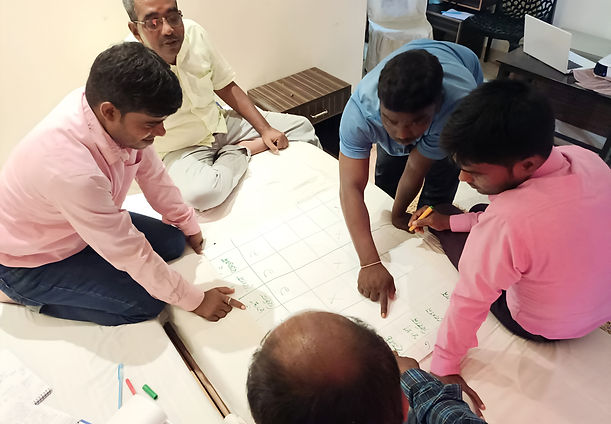
how we work

We collaborate with the perspectives and experiences of individuals and communities who are most affected by poverty, inequality, and injustice — especially those who are most marginalized, such as indigenous populations, women, individuals with disabilities, youth, and children — as they possess a deep understanding of both the challenges and the potential solutions.

We engage in partnerships with National and International Philanthropic Organisations, Government entities, Panchayat Bodies, and Community-Based organisations to maximise our impact in combating poverty and inequality.

We acknowledge that our team, volunteers, and supporters represent the most valuable assets of our organisation, and their contributions are essential for achieving the transformative changes we seek in society.

Focus Areas
Economic Advancement
Facilitate and empower marginalised women and farmers by connecting them with private & government initiatives aimed at micro-enterprises, entrepreneurship, and credit assistance.
Gender Equity & Justice
Facilitate and empower women and girls who face gender-based discrimination or violence.
Climate Adaptation
Assist the most impoverished and vulnerable communities in facing climate risks, enhance their resilience, invest in renewable energy, and take proactive measures against climate change.
Rights of At-Risk Communities
Support indigenous populations in making self-determined choices that impact their lives, and ensure that institutions are responsive to their rights and needs.

FIVE-YEAR PLAN: 2026 - 2030
2026
(1)
Based on the participatory assessment and micro planning process, community-driven development (CDD) initiatives with the most vulnerable people will be implemented in line with the SDG Mission of 2030.
(2)
CSRA will empower individuals, communities, and CBOs by building awareness and knowledge to address ecological challenges, promote weather-enabled crop planning, adapt to droughts, incubate green social enterprises, and encourage shifts in behaviour and lifestyle practices for sustainable access to water and energy.
(3)
Work on a whole-of-society approach to address the climate crisis with the propagation of Community-Based Natural Resources Management (CBNRM) practices.
2027
(1)
CSRA will initiate to transform 1 Lakh vulnerable households, especially among marginalised, Indigenous, women and PWD headed families, into sustainable livelihoods through a strategy focused on securing government entitlements, establishing social security, and promoting livelihood diversification, and fostering resilience against various shocks.
(2)
Enhance the capacity of the social protection system and the occupational safety and health (OSH) measures for stone crushers and other at-risk workers to provide quality, inclusive, and gender-sensitive social protection benefits and services across the lifespan, particularly targeting the most vulnerable populations.
2028
(1)
Continuous effort to develop new partnerships and collaborations with academic, technical and resource agencies across the state, nation and globe with a similar vision & mission to eradicate poverty and inequalities.
(2)
Expand work in the most vulnerable and deprived areas (85.96% and 73.08% of Indigenous people in West Bengal & Jharkhand of India, as per SECC).
(3)
The next phase of strategic, inclusive, and adaptive leadership development will emphasize transitioning from solely functional responsibilities to encompass middle management, program managers, and emerging leaders within CSRA, ensuring operational continuity and enhancing impact.
2029
(1)
CSRA will integrate community-led WASH and watershed management to empower local populations. It will use tools such as CLTS and rainwater harvesting to help communities eliminate open defecation, improve hygiene, and enhance water security, agricultural productivity, and climate resilience.
(2)
CSRA's projects will not only focus on rural economic growth but also strive to ensure democratic space for vulnerable people, especially women, for leadership and inclusive development.
2030
(1)
By the year 2030, every member of the organisation's marginalised communities will attain a satisfactory standard of living and develop resilience against socio-economic and climate-related challenges through decent employment with emphasis on agriculture, a robust social protection framework, and inclusive, innovative, and sustainable economic development.
(2)
Through research, storytelling, and convenings, the last 20 years of CSRA's work will be disseminated through the learnings, lived experiences, and community voices.
